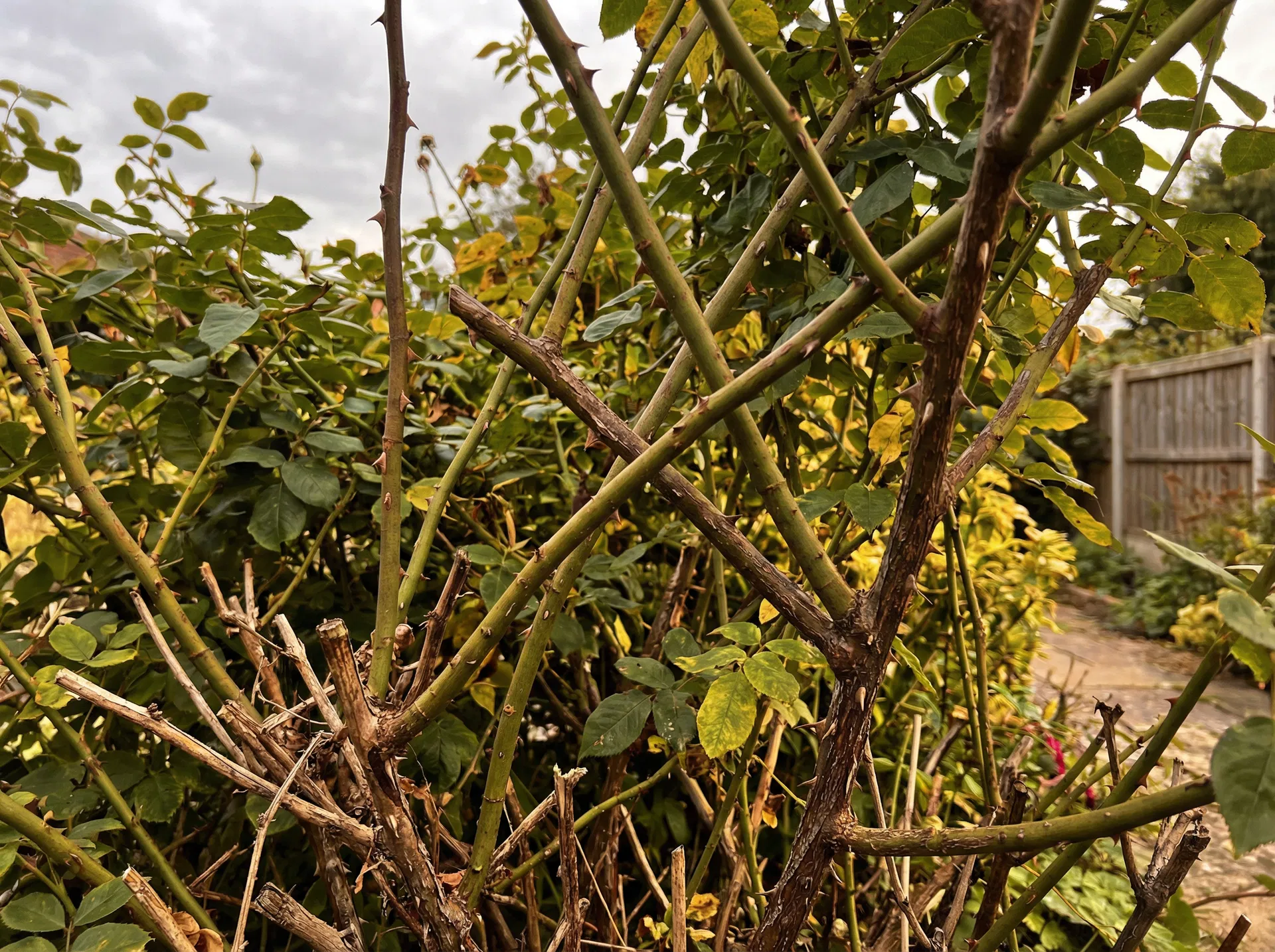
Why These Cuts Are Suggested
Dead Cane
This cane shows brown, dry bark — a sign of dead wood. Remove at the base to encourage new growth from healthy canes.
Crossing Branch
This branch crosses inward and rubs against another cane. Friction wounds invite disease. Remove the weaker of the two.
Dense Interior
This cluster of thin stems creates crowded interior growth. Thinning here will improve airflow and reduce fungal risk.
Strong Cane
This outward-facing cane has healthy green bark and good structure. Preserve this as part of your main framework.
Weak Sucker
This thin sucker growing from the base diverts energy from main canes. Remove it at the root to focus plant energy upward.
Healthy Framework
This central branch provides excellent structural support. Keep it as the backbone of the plant's shape.
Best Season to Prune
Late winter to early spring (February–March), just as buds begin to swell
Plant Identified
Rose Bush
Goal: General Pruning
General Tips for Rose Bush
- Always cut at a 45° angle, slanting away from the bud to shed water
- Wear thick gloves — rose thorns can cause serious puncture wounds
Safety Note
Always wear protective gloves and eye protection when pruning. For trees taller than 3 metres or near power lines, consult a certified arborist. Never prune in wet or windy conditions.